What Are the Top 10 Professional Crimping Machines?
Choosing among the top 10 professional crimping machines requires more than comparing prices or advertised pressure ratings. A reliable Professional Crimping Machine should deliver consistent connections, repeatable force, and clean results across demanding production cycles. It must also match the cable size, terminal design, material, and expected workload. In a busy workshop, small differences matter. A poorly matched die can leave uneven compression, visible conductor damage, or a connection that fails inspection.
This guide examines ten leading machine types and models through practical criteria. These include crimp accuracy, operating speed, tooling flexibility, adjustment control, maintenance needs, safety features, and long-term support. Pneumatic, hydraulic, electric, and automated systems each serve different production environments. Some suit compact repair benches. Others belong on high-volume assembly lines, where every second and every connection count. Real user experience matters here, not just catalog specifications. Noise, setup time, operator fatigue, and access to replacement dies can change the daily result.
Performance is not everything. A machine may look impressive yet feel inconvenient after several hours of use. That detail is easy to overlook. The ranking should therefore remain practical rather than absolute, because the “best” choice depends on production volume and terminal requirements. Manufacturer documentation, recognized testing practices, and careful installation should guide the final decision. Even experienced technicians can misjudge a machine when sample testing is skipped. Use this overview as a starting point, then verify compatibility with actual materials before purchasing.
Professional Crimping Machine Classes by 1–30 kN Force and Wire Capacity
What Are the Top 10 Professional Crimping Machines?
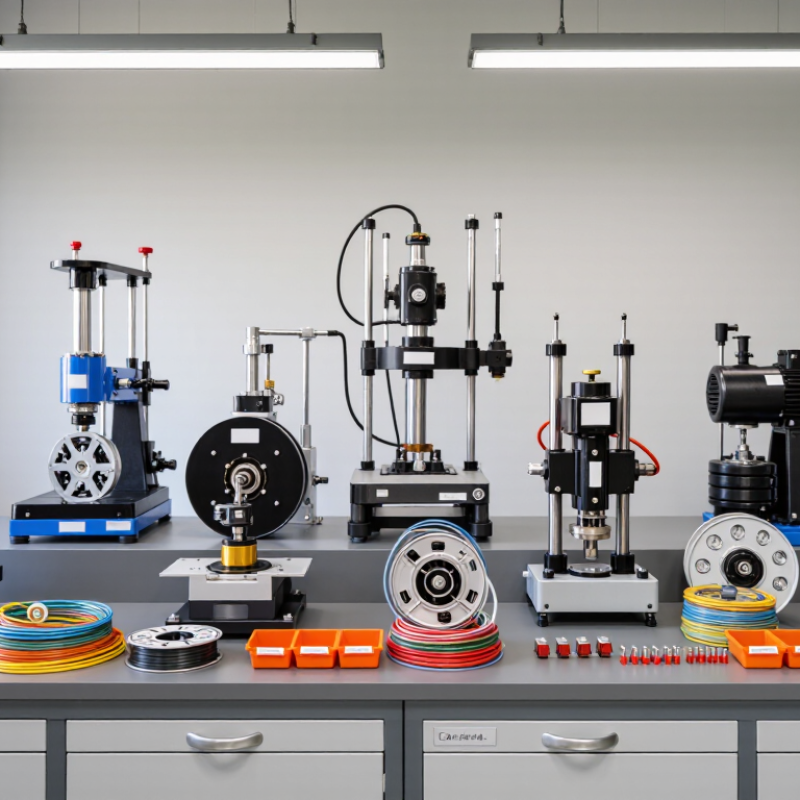
Professional crimping machines are better compared by force class and wire capacity, not appearance. Machines rated from 1 to 3 kN suit small terminals and thin control wires. They are useful on compact workbenches. Models between 4 and 10 kN handle common automotive, appliance, and industrial harnesses. In practice, this range offers the best balance between speed, die flexibility, and floor space.
Machines producing 11 to 20 kN serve larger terminals, battery cables, and heavy equipment wiring. The 21 to 30 kN class is designed for thick conductors and high-force terminals. However, greater force does not automatically create better crimps. Terminal material, conductor strands, insulation diameter, and die accuracy matter just as much. The 2024 MarketsandMarkets wire and cable study identifies automotive, industrial equipment, and energy infrastructure as major demand areas. These sectors require repeatable compression, traceable settings, and stable production cycles.
The top ten machines should therefore be grouped by actual wire capacity. A 1–3 kN unit may support fine wires below 2.5 mm², while 4–10 kN equipment often covers mid-range cables up to approximately 10 mm². Larger systems can reach 25 mm² or more, depending on terminal design. IPC/WHMA-A-620 acceptance guidance reinforces the need to inspect crimp height, conductor brush, bellmouth, and insulation support. One weakness remains: published capacity charts are not always comparable. Buyers should test their own terminals before purchasing. Small errors become expensive quickly.
What Are the Top 10 Professional Crimping Machines? - Professional Crimping Machine Classes by 1–30 kN Force and Wire Capacity
| Class |
Nominal Crimping Force |
Typical Wire Capacity
(Copper Conductor) |
Typical Professional Use |
Common Tool Format |
Approx. Crimp Cycle |
Recommended Terminal Types |
| 1 |
1 kN |
0.08–0.50 mm² |
Fine-wire control circuits, sensors and miniature electronic assemblies |
Precision hand tool or compact bench tool |
2–4 seconds |
Insulated miniature terminals, ferrules and signal contacts |
| 2 |
2 kN |
0.14–1.50 mm² |
Panel wiring, appliance harnesses and low-voltage control cabinets |
Ratchet hand tool or small pneumatic bench tool |
2–4 seconds |
Wire-end ferrules, pre-insulated terminals and open-barrel contacts |
| 3 |
3 kN |
0.25–4.00 mm² |
Automotive harnesses, industrial control wiring and maintenance work |
Powered hand tool or compact pneumatic unit |
1.5–3 seconds |
Closed-barrel terminals, ferrules and insulated ring or fork terminals |
| 4 |
5 kN |
0.50–6.00 mm² |
General electrical assembly, distribution panels and production wiring |
Bench-mounted pneumatic or electric machine |
1–2.5 seconds |
Ferrules, insulated terminals and small non-insulated cable lugs |
| 5 |
8 kN |
1.00–10.00 mm² |
Medium-duty harness production and control-panel manufacturing |
Pneumatic bench crimping machine |
0.8–2 seconds |
Tubular cable lugs, heavy ferrules and non-insulated terminals |
| 6 |
10 kN |
2.50–16.00 mm² |
Industrial cabinets, motor controls and medium-size power connections |
Electric or pneumatic bench machine |
0.8–1.8 seconds |
Power cable lugs, splice connectors and heavy-duty ferrules |
| 7 |
12 kN |
4.00–25.00 mm² |
Industrial power distribution, machinery wiring and control-system assembly |
High-force pneumatic or electric bench machine |
1–2 seconds |
Copper cable lugs, butt connectors and compression terminals |
| 8 |
16 kN |
6.00–35.00 mm² |
Medium power cables, switchgear assembly and electrical maintenance |
Hydraulic or high-force electric machine |
1–2.5 seconds |
Heavy-duty cable lugs, shear-bolt preparation and power splices |
| 9 |
20 kN |
10.00–50.00 mm² |
Low-voltage power distribution, renewable-energy wiring and industrial equipment |
Hydraulic bench crimping machine |
1.5–3 seconds |
Large copper or aluminium cable lugs and power connectors |
| 10 |
30 kN |
16.00–70.00 mm² |
Large power cables, switchboards, industrial installations and infrastructure projects |
Heavy-duty hydraulic or servo-electric machine |
2–4 seconds |
Large compression lugs, parallel connectors and high-current cable joints |
Note: The capacity ranges are representative professional classes for copper conductors. Actual performance depends on terminal material, die geometry, conductor class, insulation diameter, crimp profile, operating pressure and the machine manufacturer’s approved tooling.
Industry Benchmarks: IEC 60352-2, ISO 9001, and Crimp-Height Control
What Are the Top 10 Professional Crimping Machines?
The top ten professional crimping machines should be judged by measurable control, not appearance or advertised speed. In production, operators examine terminal alignment, conductor position, die condition, and repeatability. IEC 60352-2 provides a useful benchmark for reliable solderless crimped connections. It addresses connection quality, mechanical performance, and consistent assembly practices. Small errors matter. A connector may look perfect while hiding insufficient compression or damaged strands.
Crimp-height control
Crimp-height control remains central to dependable production. A professional machine should support precise height adjustment, stable tooling, and repeatable measurements across production runs. Technicians commonly verify crimp height with a calibrated micrometer and confirm strength through pull testing. Cross-sectional inspection can reveal voids, uneven compression, or excessive deformation. These checks create evidence rather than assumptions. However, crimp height alone cannot prove every connection is acceptable.
Quality management and production stability
ISO 9001 adds a quality-management framework rather than a machine design requirement. Strong suppliers document setup procedures, calibration intervals, operator training, material changes, and corrective actions. Data logging also helps identify gradual die wear before failures increase. In real workshops, the best machine is not always the fastest. It is the one that maintains stable results during long shifts and changing workloads. Even experienced teams make mistakes. A rushed setup, worn applicator, or poorly stripped wire can undermine an otherwise capable system. That weakness deserves honest review.
Top 10 Machines Compared by Force, Stroke, Cycle Time, and Wire Range
Choosing among the top 10 professional crimping machines requires more than comparing price or appearance. Force shows how reliably a machine compresses terminals, especially with thick copper conductors. Light-duty models may deliver 20–30 kN, while heavy industrial units can exceed 100 kN. Higher force is not always better. Excess pressure can deform terminals or damage delicate insulation.
Stroke affects die movement and terminal compatibility. A shorter stroke can support fast, repetitive work, while a longer stroke may handle larger connectors. Cycle time matters on production lines. Some machines complete a crimp in under two seconds, but real output also depends on loading, alignment, and operator movement. Wire range must match actual shop requirements. A machine rated for 0.5–16 mm² wire may be unsuitable for occasional 50 mm² cables. Specifications can look impressive on paper.
Tips: Test sample terminals before purchase. Measure finished crimp height, pull-out strength, and visual symmetry. Ask whether the stated cycle time includes loading. It often does not. Check adjustment access, die replacement, guarding, and maintenance records. I have found that a slightly slower machine can produce more consistent results when operators change wire sizes frequently. Record force, stroke, and cycle time under the same conditions. Otherwise, the comparison becomes misleading. A practical review should also note noise, footprint, tooling flexibility, and the learning curve, because these details affect daily reliability more than a single headline specification.
What Are the Top 10 Professional Crimping Machines?
Comparison of anonymized professional crimping machines by rated force, stroke, cycle time, and maximum supported wire cross-section. Lower cycle time indicates faster operation.
Technical values are shown in commonly used metric units: force in kN, stroke in mm, cycle time in seconds, and wire range in mm². The chart uses independent scales so that each specification remains readable.
Terminal Applications Across 0.14–120 mm² Conductors and Production Volumes
What Are the Top 10 Professional Crimping Machines?
Selecting a professional crimping machine depends on conductor size, terminal design, and daily production volume. For 0.14–1.5 mm² conductors, compact benchtop pneumatic machines offer quick setup and consistent force. Servo-driven applicators suit repeatable terminal work on automated wire-processing lines. For 1.5–6 mm² conductors, programmable electric machines provide useful control over stroke, pressure, and cycle timing. They also reduce operator variation.
The middle range, from 6–35 mm², often requires stronger pneumatic or hydraulic systems. These machines handle battery cables, industrial wiring, and larger ring terminals. Semi-automatic units work well for hundreds of crimps per shift. Fully automatic systems become more practical when production reaches several thousand pieces. Rotary crimping machines can improve throughput, but they demand careful terminal alignment. Small errors become expensive quickly.
For 35–120 mm² conductors, high-force hydraulic machines are common choices. Heavy-duty applicators, monitored crimp presses, and custom production cells complete the top ten categories. Force monitoring can detect incomplete compression, damaged strands, or incorrect terminal positioning. A machine rated for 120 mm² may still perform poorly on a thin 0.14 mm² wire. That mismatch is easy to overlook. In practice, I would test actual terminals, insulation thickness, and cable flexibility before selecting equipment. Noise, die-change time, maintenance access, and operator training also affect real output. Published cycle rates can look impressive, yet changeovers may reduce the daily total.
Selection Matrix for Manual, Pneumatic, Electric, and Hydraulic Crimpers
Choosing the top 10 professional crimping machines requires more than comparing maximum force. A practical selection matrix should measure crimp range, repeatability, cycle speed, operator effort, tooling access, maintenance, and safety controls. These factors reveal how a machine performs during an eight-hour production shift.
Manual crimpers suit low-volume work, field repairs, and applications needing close tactile feedback. They are affordable and dependable, but operator fatigue can affect consistency.
Pneumatic models provide faster cycles and steadier pressure when a clean air supply is available. Electric crimpers offer programmable control, useful data logging, and easier installation. However, their electronics may need skilled servicing.
Hydraulic crimpers deliver high force for thick conductors and heavy assemblies. They are powerful, though often slower and less convenient for small workstations.
A strong matrix can score each of the ten machines from one to five across these categories. Weight force and repeatability more heavily for industrial cables. Give portability greater importance for service technicians. Check whether dies change without excessive setup time. Inspect the handle, foot pedal, guards, and emergency stop in person. Small details matter. I have seen a technically impressive machine lose value because its die storage was awkward and its noise level was underestimated. The matrix is useful, but not flawless. Actual samples, operator trials, and documented maintenance records should challenge the initial ranking.