Leave Your Message

Top 10 Water Jet Machine Types for Textile Production

Water Jet Machine Textile technology remains important for producers seeking high-speed, clean, and flexible fabric formation. The machine uses fine water jets to insert weft yarns through the shed. It can produce smooth fabrics, including polyester, nylon, microfiber, and certain blended materials. However, water quality, pump pressure, nozzle condition, and drying capacity directly influence production stability.

The International Textile Machinery Federation’s International Textile Machinery Shipment Statistics report shows continued global investment in shuttleless weaving technologies. Its data also suggests that modern weaving remains concentrated in Asia, where large mills demand higher speed and tighter quality control. Textile Exchange reported that global fiber production reached approximately 124 million tonnes in 2023. That volume increases pressure on manufacturers to reduce waste, energy use, and unnecessary water consumption. Water-jet weaving is efficient in some applications, but it is not automatically sustainable. That distinction matters.

Dr. Seshadri Ramkumar, a recognized textile materials expert, offers a useful principle: “Process control is the quiet engine behind textile performance.” This idea guides our review of the top 10 Water Jet Machine Textile types. We compare their loom speed, fabric compatibility, water-management requirements, maintenance demands, and practical operating limits. Some machines perform beautifully on lightweight synthetic fabrics. Others struggle when yarn hairiness, contamination, or unstable humidity rises.

The comparison is not perfect. Supplier specifications often describe ideal conditions, not ordinary factory floors. Real performance depends on skilled operators, maintenance discipline, and local water treatment. This guide therefore examines both the impressive advantages and the inconvenient weaknesses behind each machine category.

Top 10 Water Jet Machine Types for Textile Production

Water Jet Machines in Textile Production: Definition and Working Principles

In textile production, a water jet machine usually refers to a water-jet loom. It inserts weft yarn by using a thin, high-speed stream of water. The jet carries the yarn through the open warp shed. A reed then pushes the inserted yarn into the fabric edge. That narrow definition matters.

Water-jet looms work best with smooth, low-absorption synthetic yarns. Polyester and nylon are common choices because they resist moisture and maintain stable movement. The machine controls pump pressure, nozzle timing, shed opening, and water volume. A small pressure error can cause missed picks, yarn loops, or uneven fabric density. Operators also monitor water cleanliness, because tiny particles may block the nozzle. The process looks simple on paper. Production is less forgiving.

Machine configurations include single-nozzle, double-nozzle, tandem-nozzle, high-speed, electronic-control, jacquard-compatible, multi-layer, narrow-width, wide-width, and specialty-fabric models. Each type changes the balance between speed, fabric width, pattern control, and maintenance demand. In a real workshop, selecting the fastest model is not always sensible. Excessive speed may increase yarn breaks and water consumption. Drying also needs attention after weaving, especially when fabric moves directly to finishing. A practical setup should match yarn behavior, fabric structure, available water treatment, and operator skill. One detail is easy to overlook: stable alignment often matters more than impressive machine speed.

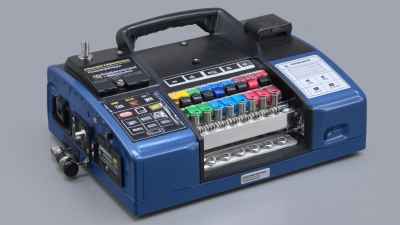
The Top 10 Water Jet Machine Types and Their Key Features

Top 10 Water Jet Machine Types for Textile Production

Water jet machines differ by nozzle design, fabric width, and control system. Single-nozzle machines use a focused water stream and suit stable, medium-weight fabrics. Double-nozzle models improve insertion speed for wider fabrics. Multi-nozzle machines distribute water across several points, supporting high-speed production. Electronic water jet looms offer precise timing, digital tension control, and quick pattern adjustments. They reduce manual correction.

High-speed water jet machines are designed for continuous filament fabrics, where smooth weft insertion matters. Narrow-width machines handle ribbons, mesh, and technical strips with compact frames. Wide-width machines produce bedding and industrial fabrics, but they need stronger support structures. Heavy-fabric models use higher insertion force and reinforced beat-up systems. Terry water jet machines manage loop formation with controlled cloth movement. Jacquard-compatible models create detailed patterns through electronic shedding systems.

Experienced technicians check water quality before judging machine performance. Hard water can leave deposits around nozzles and valves. A low-water-consumption model may reduce waste, yet it can require stricter filtration. That trade-off is easy to underestimate. In practice, the “fastest” machine is not always the most productive. Frequent stoppages, wet floors, or difficult cleaning can erase its speed advantage. Operators should record fabric defects, nozzle pressure, and maintenance time during trials. Small data gaps remain a problem. A machine that performs well on polyester may struggle with textured yarns or unstable fabric edges.

How Water Jet Machines Support Different Textile Manufacturing Processes

Top 10 Water Jet Machine Types for Textile Production

Water-jet equipment supports weaving, bonding, cutting, dyeing, washing, and finishing. Water-jet looms insert weft yarns into lightweight polyester or nylon fabrics. Hydroentanglement lines use fine, high-pressure streams to bond fibers without chemical binders. Water-jet cutters shape layered textiles with clean edges and limited mechanical distortion. Jet dyeing machines circulate fabric through dye liquor, while overflow units reduce creasing during wet processing. Rinsing jets, spray-finishing units, fabric-relaxation systems, dewatering machines, and filtration units complete the wider equipment group.

The scale is significant. Textile Exchange’s Materials Market Report 2024 estimates global fiber production reached 124 million tonnes in 2023. UNEP reports that textile production creates roughly 2–8% of global greenhouse-gas emissions. These figures make process control more important, not merely faster machinery.

A practical audit should measure nozzle pressure, water temperature, liquor ratio, fabric speed, and wastewater load. The trade-off matters. Water-jet weaving can improve fabric uniformity, but it still needs clean water and effective drying. Hydroentanglement may reduce binder use, yet its pumps consume substantial electricity.

“Water-based” is not automatically sustainable.

That assumption needs challenging. In real production, clogged nozzles, uneven pressure, and excessive rinsing can quietly increase waste. Operators should compare water meters, energy readings, defect rates, and recovery performance before selecting among the ten machine types.

Performance Comparison: Speed, Precision, Fabric Compatibility, and Efficiency

Top 10 Water Jet Machine Types for Textile Production

Textile plants commonly compare pure-water, abrasive-water, CNC, gantry, conveyorized, multi-head, three-axis, five-axis, robotic, and micro-waterjet machines. Pure-water systems suit cotton, wool, silk, leather, foam, and layered technical fabrics. They cut without generating heat, which helps protect delicate edges and reduce discoloration. Abrasive systems offer stronger cutting power, but they may contaminate soft textiles and require additional cleaning.

Speed depends on pump pressure, nozzle size, material thickness, and cutting path. Conveyorized machines support continuous production and reduce loading delays. Multi-head models can cut repeated patterns quickly, although alignment errors may multiply across heads. CNC tables provide dependable precision for intricate panels, while robotic systems handle curved or three-dimensional work more flexibly. Five-axis movement improves access around complex shapes, but it usually increases programming time and maintenance demands.

Efficiency is not just cutting speed. A machine that wastes less fabric may outperform a faster machine. Nesting software, stable material tension, and clean water filtration affect daily output. Micro-waterjet equipment can create fine details with narrow kerfs, yet its slower pace may limit large-volume orders. In practical trials, operators should measure finished pieces per hour, edge quality, water use, downtime, and rework. Lab results can look impressive. Factory floors are less forgiving. Even an accurate machine may underperform when fabric layers shift, and that issue is easy to underestimate.

Top 10 Water Jet Machine Types for Textile Production – Performance Comparison: Speed, Precision, Fabric Compatibility, and Efficiency

No. Machine Type Typical Cutting Speed Typical Accuracy Best Fabric Compatibility Water / Energy Efficiency Production Strengths Key Limitations Overall Suitability
1 Pure-Water CNC Cutting Machine 100–500 mm/min ±0.05–0.15 mm Woven fabrics, knitted fabrics, felt, leather, foam, nonwovens High efficiency; no abrasive media and comparatively low operating waste Clean edges, low heat generation, and excellent suitability for soft or flexible materials Slower on thick or highly compressed materials; requires effective water collection and drainage ★★★★★
2 Multi-Head Pure-Water Jet Cutter 150–700 mm/min ±0.08–0.20 mm Apparel layers, upholstery fabric, technical textiles, insulation textiles Very high throughput; multiple cutting heads share one cutting table Suitable for batch production and synchronized repetitive patterns Higher capital cost; head spacing and nesting layout must match the product range ★★★★★
3 Conveyor-Belt Water Jet Cutter 100–600 mm/min ±0.10–0.25 mm Roll-fed fabric, carpet, geotextiles, nonwovens, coated textiles High material utilization; supports continuous feeding and reduced handling time Well suited to long production runs and integration with spreading or stacking systems Initial alignment and belt maintenance are important for consistent registration ★★★★★
4 High-Pressure 3-Axis Water Jet Cutter 80–450 mm/min ±0.05–0.15 mm Flat textile panels, composites, coated fabrics, multilayer materials Good efficiency with a relatively simple motion system Reliable X-Y cutting with consistent perpendicular edges on flat workpieces Limited ability to compensate for taper or cut complex three-dimensional surfaces ★★★★☆
5 5-Axis Water Jet Cutting System 60–350 mm/min ±0.05–0.12 mm 3D textiles, molded upholstery, composite textile parts, contoured technical fabrics Moderate efficiency; advanced motion control increases programming and setup requirements Handles angled cuts, bevels, contours, and three-dimensional components Higher purchase and maintenance cost; usually unnecessary for simple flat fabric cutting ★★★★☆
6 Abrasive Water Jet Cutter 20–180 mm/min ±0.05–0.15 mm Textile composites, glass-fiber fabrics, carbon-fiber fabrics, rubber-backed materials Moderate efficiency; abrasive consumption and sludge disposal increase operating cost Cuts hard, laminated, and reinforced textile materials that pure water cannot process effectively Usually excessive for ordinary fabric; may require edge cleaning and abrasive management ★★★☆☆
7 Micro-Water Jet Cutting Machine 20–180 mm/min ±0.01–0.05 mm Fine mesh, narrow technical textiles, precision filters, delicate engineered fabrics Moderate efficiency; very low kerf can reduce material loss Excellent detail resolution, small kerf width, and precise small-part production Lower cutting rate and smaller usable work envelope than standard industrial systems ★★★★☆
8 Robotic Water Jet Cutting Cell 50–300 mm/min ±0.15–0.40 mm Large 3D textile assemblies, automotive interiors, molded textile components Good labor efficiency; automation reduces manual repositioning and repetitive handling Flexible reach, multi-angle access, and easy adaptation to large or irregular parts Accuracy depends strongly on robot calibration, fixture stiffness, and workpiece movement ★★★☆☆
9 Stack-Cutting Water Jet System 40–250 mm/min ±0.10–0.25 mm Layered apparel fabric, upholstery covers, laminated textiles, repeated-cut kits High output per setup; uses one cutting cycle for several aligned layers Reduces handling time and improves productivity for repeated components Water pressure and cutting parameters must be adjusted to avoid layer shifting or deflection ★★★★☆
10 Dual-Zone Water Jet Cutting Table 80–450 mm/min ±0.08–0.20 mm Apparel panels, home textiles, technical fabric kits, mixed-size production orders High utilization; loading or unloading one zone can occur while the other is cutting Reduces idle time and supports mixed batches without stopping the complete system Requires disciplined workflow planning and sufficient floor space for material handling ★★★★☆
Performance values are representative engineering ranges for industrial textile applications. Actual results vary with pump pressure, nozzle diameter, fabric thickness, layer count, nesting quality, machine condition, and cutting-program settings. Pure-water systems are generally preferred for ordinary textiles, while abrasive systems are mainly used for reinforced or composite fabrics.

How to Select, Operate, and Maintain a Water Jet Machine for Textiles

Selecting a water jet machine for textile production starts with the yarn, not the machine catalog. A water jet loom suits hydrophobic filaments and stable synthetic yarns, while absorbent fibers can swell and lose control. Check fabric width, insertion rate, warp tension, and moisture-handling requirements. A narrow sample run is more reliable than a confident guess. Ask the operator to inspect the nozzle pattern and cloth formation. Small uneven streaks often reveal poor alignment before they become expensive defects. Choose pump capacity according to width and speed. Oversizing may increase energy use, splashing, and stress on delicate yarns. Specifications can mislead.

During operation, set water pressure gradually. Start below the target and observe pick placement, selvage quality, and fabric wetness. Keep the workspace dry and use guards, emergency stops, and electrical protection correctly. Operators should never adjust moving parts by hand. Record pressure, speed, temperature, and defect locations each shift. Short notes matter. If the machine sounds different, stop and investigate. A vibrating pump or blocked filter can quickly disturb weaving. Training should include threading, nozzle cleaning, and controlled restart procedures.

Maintenance depends on disciplined observation. Filter and treat process water according to its quality, because minerals can narrow nozzles and damage pumps. Inspect seals, hoses, valves, reeds, and sensors on a scheduled cycle. Clean nozzles with approved tools, not improvised metal wires. Dry exposed surfaces after production to reduce corrosion. Review maintenance records against fabric defects every week. Sometimes the cause is not mechanical; yarn preparation or excessive tension may be responsible. A good technician should question the first diagnosis. Last week’s fault may return if that assumption remains untested.

Top 10 Water Jet Machine Types for Textile Production

The chart compares representative loom-speed ranges for common water jet machine configurations. Actual performance depends on fabric width, yarn type, fabric construction, water quality, and machine settings.

Use higher-speed configurations for lightweight synthetic filament fabrics, while jacquard, terry, wide-width, and heavy-duty machines generally operate at lower speeds to maintain fabric quality and stable weft insertion. Regular filter cleaning, nozzle inspection, water-temperature control, and lubrication are essential for reliable operation.