Leave Your Message

Why Are Textile Industry Machines Important?

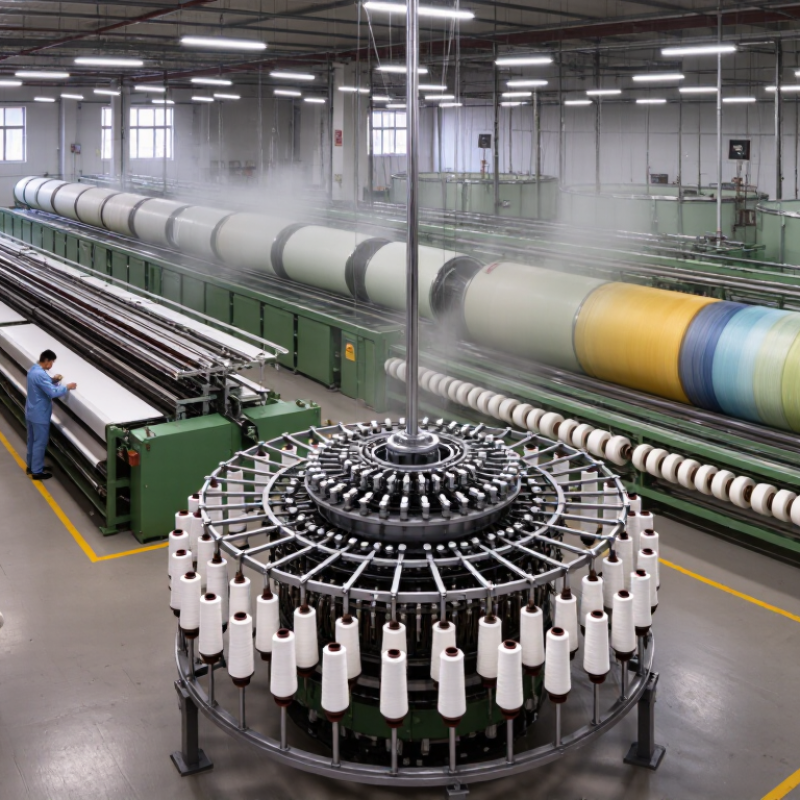
Textile Industry Machines are the working heart of modern textile production. Spinning frames turn loose fibers into yarn. Looms interlace threads into fabric, while knitting machines form loops at speed. Dyeing and finishing equipment add color, texture, and useful performance. These machines shape how consistently a mill can produce cloth, how much material it wastes, and how quickly it can respond to changing orders.

Their importance is visible on the factory floor. A well-adjusted loom can reduce broken threads; a calibrated dyeing system can help keep color even across a batch. Textile researcher Dr. Seshadri Ramkumar of Texas Tech University studies fibers and textile materials. A fair paraphrase of his research perspective—not a verbatim quotation—is: “Textile innovation matters when it improves materials for real-world use.” That idea also applies to machinery: technical capability matters when it delivers dependable results for workers and customers.

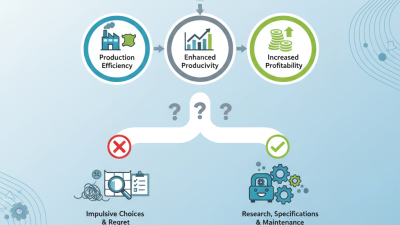
Yet machines are not automatic solutions. Poor maintenance, unsuitable settings, or rushed training can undermine even advanced equipment. A machine can waste resources, too. Manufacturers must weigh output against energy use, repair needs, worker skills, and product quality. The right choice depends on the fabric, fiber, production scale, and goals of each mill. Some trade-offs remain difficult. Examining these practical details explains why Textile Industry Machines matter—and why their value depends on informed decisions, not speed alone.
Why Are Textile Industry Machines Important?

Textile Machinery Across Five Stages: Fiber Preparation, Spinning, Fabric Formation, Finishing, and Inspection

Why Are Textile Industry Machines Important?

Textile Machinery Across Five Stages: Fiber Preparation, Spinning, Fabric Formation, Finishing, and Inspection

Textile machinery links five stages that determine whether raw fiber becomes consistent, usable fabric. In preparation, opening and carding equipment separates fibers and removes debris; a blocked carding zone can leave visible unevenness downstream. Spinning frames then twist fibers into yarn, while looms or knitting machines form the fabric. Each stage depends on stable settings, not speed alone.

Textile Exchange’s Materials Market Report 2024 estimates global fiber production reached 124 million tonnes in 2023 and projects it may rise to 160 million tonnes by 2030. At that scale, efficient equipment and careful process control matter. Finishing machines apply treatments, dry cloth, or set its dimensions. Inspection systems and trained operators catch defects such as broken yarns, stains, and uneven edges before shipment. Still, automation can repeat a poor setting faster; machines need maintenance and skilled oversight.

Tips: Check fiber moisture before spinning, and inspect fabric under consistent lighting. Record machine settings beside defect notes. Small details help. But one inspection pass may miss flaws, so review recurring problems across stages.
From Fiber to Yarn: Ring-Spinning Spindles Can Reach 25,000 rpm

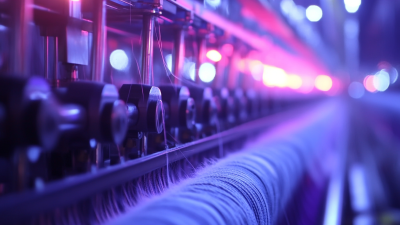
Textile machines matter because they control how consistently loose fibers become usable yarn. In ring spinning, the spindle twists a thin strand while the traveler guides it onto a bobbin. Some systems can reach speeds near 25,000 rpm, though actual performance depends on the machine, yarn, and operating conditions. That is fast. At this speed, small imbalances can cause vibration, uneven winding, or more frequent end breaks.

Speed alone does not guarantee good yarn. Operators also watch twist, spindle temperature, bobbin build, and the condition of bearings and rings. A rough sound or a bobbin that feels unusually warm may signal a problem worth checking. When settings suit the fiber and yarn count, high spindle speed can raise output without sacrificing consistency. But pushing speed too far can create waste and extra downtime.

The details are easy to underestimate. Even room humidity can affect how some fibers behave as they pass through drafting rollers. Maintenance matters, too: worn parts may turn a stable run into a noisy one. A spindle rated for 25,000 rpm is not necessarily best used at that limit every shift. Choosing a practical speed takes observation and adjustment, and there is no perfect setting for every fiber blend.

Why Are Textile Industry Machines Important? From Fiber to Yarn: Ring-Spinning Spindles Can Reach 25,000 rpm

At a constant 25,000 rpm, a ring-spinning spindle completes about 417 revolutions per second. The chart shows the theoretical cumulative revolutions over four seconds, illustrating the high-speed twisting that helps turn drafted fibers into yarn.

From Yarn to Fabric: Air-Jet Looms Can Exceed 1,500 Picks per Minute

An air-jet loom can insert more than 1,500 picks per minute in suitable production conditions. Each pick is a weft yarn carried across the warp by a controlled stream of compressed air. At that pace, the shed opens and closes in rapid, precise cycles, while relay nozzles help guide the yarn across the fabric width. The result can be high output for suitable fabrics.

That is fast. But the headline number is not a promise for every job. Fabric width, yarn type, machine settings, and operating conditions all affect actual speed. A fine, delicate yarn may need gentler handling than a stronger yarn, and poor tension can cause missed insertions or uneven cloth. Operators monitor the yarn path, listen for changes in the machine’s rhythm, and inspect fabric for faults.

It is tempting to judge a loom by picks per minute alone. That misses the practical trade-offs. Air-jet weaving relies on compressed air, so air use and system maintenance matter alongside production rate. Nozzle alignment, clean filters, and steady pressure help keep insertion consistent. Even small adjustments can affect fabric quality, and a faster setting is not always the better setting. A useful comparison considers both output and the finished cloth’s consistency.

Fabric Formation Beyond Weaving: How Circular Knitting Machines Make Continuous Tubes

Circular knitting machines matter because they form fabric directly from yarn, often as a continuous tube. Unlike weaving, which interlaces lengthwise and crosswise yarns, knitting builds connected loops. In a circular machine, needles sit around a cylinder while yarn feeders supply thread as the needles form rows of stitches. The fabric emerges below the machine as a soft tube.

This structure suits items such as sock blanks, cuffs, and tubular garment panels. It can reduce seam work and help maintain consistent production, but results depend on yarn tension, stitch length, and machine gauge. A slight tension change may show up as uneven loops or faint stripes. No setup is perfect. Operators need to check the fabric as it runs, not only after a roll is finished.

Tips: Check the tube’s edges and loop formation during production. Keep yarn feeds even, and record settings when changing yarn or fabric weight. If the tube twists or puckers, pause and inspect tension before adjusting several controls at once. Small changes can be revealing.

Production Quality: How Machine Settings Shape Yarn Count, Fabric Density, and Defect Rates

Machine settings translate directly into measurable yarn and fabric characteristics. A spinning frame’s draft ratio and roller spacing influence linear density and unevenness; ISO 2060 expresses yarn count in tex, or grams per 1,000 metres. A small drafting error can therefore shift the target count across a long package. Check samples at the start and end of a run, not just one convenient cone. Small changes matter. A stable average can still conceal thin places, thick places, or neps.

On weaving machines, warp tension, loom speed, and pick insertion affect fabric density and defect risk. ASTM D3775 measures woven-fabric thread count by counting warp and filling yarns, giving technicians a practical way to compare settings with the specification. If density drifts, the cloth may feel too open or stiff, even when yarn count is correct. Keep settings, test results, and defect maps tied to each production lot. Then compare actual results against the mill’s approved tolerances, rather than relying on a dial reading alone. The honest limitation: one inspection sample cannot represent every metre of fabric.

Why Are Textile Industry Machines Important? - Production Quality: How Machine Settings Shape Yarn Count, Fabric Density, and Defect Rates

The figures below are illustrative production-control examples, not universal specifications or guaranteed results. Suitable settings depend on fiber type, yarn construction, machine model, and fabric requirements.

Machine / process Key machine setting Quality dimension Illustrative target or result How the setting affects quality Useful defect / control check
Ring spinning Drafting ratio and roller gauge, adjusted for fiber length and yarn specification Yarn count and evenness Example: 30 Ne cotton yarn, count variation held within the mill’s specified tolerance Stable drafting helps control delivered yarn mass per unit length. Poor fiber control can cause thick and thin places. Check count deviation, yarn evenness (CVm), and thin-place events.
Ring spinning Spindle speed and twist level Strength, hairiness, and end breaks Example: around 800–850 turns/m for a 30 Ne cotton yarn; the required value varies by fiber and end use Insufficient twist can reduce strength; excessive twist can make yarn harsher and affect fabric handle. Higher speed can increase break risk if settings and materials are not matched. Track yarn tensile strength, hairiness, and breaks per spindle-hour.
Winding Winding tension, clearer limits, and splicing settings Package quality and yarn fault level Example: consistent package density with clearer settings matched to the yarn and downstream process Excessive tension may stretch or weaken yarn; inadequate tension can produce unstable packages. Clearer settings determine which yarn faults are removed. Inspect package shape, unwinding behavior, splice quality, and clearer cuts.
Weaving loom Warp tension, take-up, and let-off settings Fabric density and dimensional consistency Example construction: 60 ends/in × 52 picks/in, measured against the fabric specification Take-up controls pick insertion per unit length; let-off and warp tension help maintain stable fabric formation and width. Measure ends and picks per inch; inspect for missing ends, missing picks, and uneven density.
Weaving loom Weft insertion timing, stop-motion sensitivity, and loom speed Defect rate and production stability Example monitoring unit: fabric defects recorded per 100 m and classified by type Correct timing and functioning stop motions help prevent loom-related faults from continuing through the fabric. Speed should be balanced with yarn and machine capability. Log broken ends, broken picks, start marks, and stops per shift.
Circular knitting Stitch length, yarn-feed tension, and take-down force Loop size, fabric weight, and dimensional stability Example stitch-length window: 2.8–3.2 mm, subject to the yarn and fabric construction Stitch length directly influences yarn consumption per loop and contributes to fabric weight and structure. Uneven feed can create visible barré or loop variation. Check stitch length, fabric mass per area, course and wale counts, and dropped stitches.
Dyeing and finishing Temperature profile, processing time, fabric width, and overfeed Shade uniformity and finished dimensions Example checks: shade difference against an approved standard; width and shrinkage within the order specification Controlled time and temperature support repeatable treatment; width and overfeed settings influence finished width, surface appearance, and relaxation behavior. Measure shade variation, finished width, skew, and shrinkage after conditioning.

Count conventions: Ne is the English cotton count, where a higher number indicates finer yarn. Fabric density is shown as ends per inch (warp) and picks per inch (weft) for woven fabric.