Leave Your Message

2026 Top Automatic Filament Equipment Suppliers?

Choosing a supplier for Automatic Filament Equipment is not just a price comparison. The right system should match the material, output target, and production environment. A line designed for steady, high-volume operation may be a poor fit for a small workshop. Details matter.

This guide examines what buyers can check when comparing suppliers in 2026, including equipment configuration, process control, service support, and the availability of spare parts. Ask for clear specifications on throughput, temperature control, winding consistency, and the materials the machine can process. Request test results or a sample production run when possible. A polished brochure is useful, but it cannot replace evidence from a real operating line.

Supplier experience also deserves close attention. Look for relevant installation history, practical training, and a service team that can explain maintenance routines in plain language. Check whether proposed performance figures are tied to stated materials and operating conditions; numbers without context can mislead. Not every line fits. Some buyers may also underestimate the time needed for commissioning, operator training, and process adjustments. That takes testing.

The suppliers discussed here should be assessed against your own requirements, not treated as a universal ranking. Compare documented capabilities, ask specific questions, and verify important claims before making a decision. A careful review takes longer, but it can reveal whether a machine is genuinely suitable for your production needs.
2026 Top Automatic Filament Equipment Suppliers?

What Is Automatic Filament Equipment and How Does It Work?

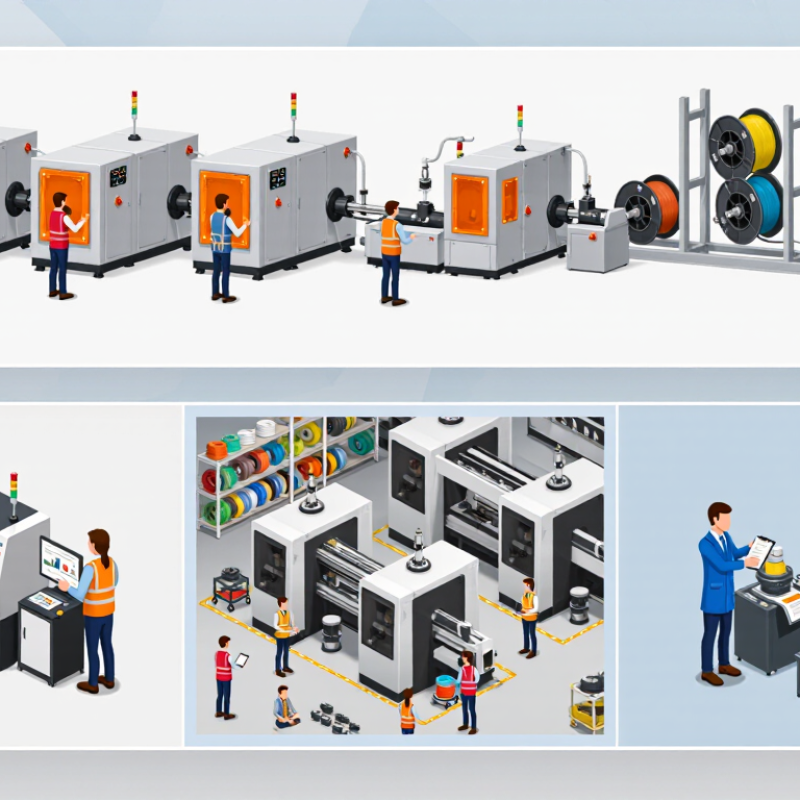
Automatic filament equipment converts plastic pellets or prepared material into continuous strands for later use. A typical line includes a feeder, drying unit, heated extruder, shaping die, cooling section, diameter gauge, puller, and spool winder. Each stage affects the finished filament. Moisture in the feedstock can cause bubbles, while uneven cooling may leave the strand soft or oval. Small details matter.

The process begins when material enters the extruder and a rotating screw moves it through heated zones. The softened polymer passes through a die, then cools in air or a water bath. A sensor checks the strand’s diameter as it moves forward. If the reading shifts, the control system can adjust pulling speed or extrusion output. The winder then lays the filament onto a spool with controlled tension. It sounds simple. In practice, settings interact, and a stable reading does not always mean a perfect spool. Operators still inspect samples, check winding, and record process conditions. When comparing suppliers, ask how the equipment handles material changes, calibration, alarms, and routine maintenance—not only its advertised production speed.
Which Types of Automatic Filament Equipment Are Available?

Automatic filament equipment ranges from compact extrusion lines to fully integrated production cells. A typical line combines resin drying, gravimetric feeding, an extruder, melt filtration, cooling, diameter measurement, and a take-up winder. Some systems also automate spool changes and production records. The Wohlers Report 2024 puts the global additive manufacturing industry at about US$20.0 billion in 2023, up 11.1% year over year. That growth makes consistent filament production valuable, but it does not guarantee demand for every machine configuration.

Available types include single-screw and twin-screw extrusion systems. Single-screw lines suit many standard thermoplastics; twin-screw systems offer stronger mixing for compounded materials. Downstream options range from manual winding to automatic spooling with tension control and laser gauges. Dryers and closed-loop diameter controls help limit moisture defects and uneven strands. Small details matter. A spool that winds poorly can still cause feeding problems later.

Buyers should compare output range, measurement accuracy, changeover time, and how easily operators can clean the melt path. Integrated lines reduce handoffs, while modular equipment can be easier to adapt. Neither is automatically better. In practice, advertised capacity may not match stable output with a particular material, so trials using the intended resin and spool size are worth requesting. One limitation remains: automation can detect variation, but it cannot fix every upstream material inconsistency.

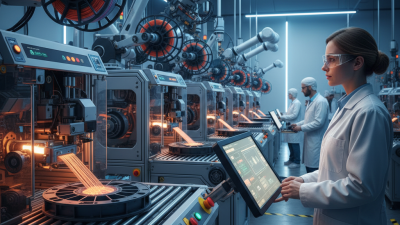
Automatic filament equipment types: These include material dryers and feeders, extrusion lines, cooling and calibration systems, diameter-measurement and control units, pullers, and automatic winders. The chart shows two commonly used nominal filament diameters, not a supplier ranking; compatible sizes vary by equipment configuration.

How Should Suppliers Be Evaluated in 2026?

In 2026, evaluate automatic filament equipment suppliers by what they can document, not by headline speed. Ask for measured output, uptime, material compatibility, and filament diameter consistency under your operating conditions. Request an acceptance test using your resin, target diameter, and production settings. Check whether the supplier records startup waste, spool changes, and rejected material. Numbers need context.

The Wohlers Report 2024 estimated that the global additive manufacturing industry reached $20.0 billion in revenue in 2023, an 11.1% increase over 2022. This broad industry figure signals continued growth, but it does not verify any equipment supplier’s claims. Compare proposals using the same test criteria, and request maintenance schedules, spare-parts lead times, operator training, and service response commitments. Ask for sample production records, not only demonstration footage. A polished trial can still hide a difficult changeover or inconsistent output.

Tips: Test it live. Run the equipment long enough to observe a material change and a routine fault recovery. Record actual output and downtime, then compare them with the supplier’s written guarantees. Also inspect the documentation and control interface; small gaps there can slow a real production line. No scorecard is perfect, so note which assumptions your team still needs to verify.

2026 Top Automatic Filament Equipment Suppliers? - How Should Suppliers Be Evaluated in 2026?

Supplier evaluation scorecard for automatic 3D-printing filament extrusion equipment. Compare proposals using the same material, filament diameter, production conditions, and acceptance criteria.

Evaluation Dimension Suggested Weight What to Evaluate Evidence to Request or Verify Score (0–5)
Application and material fit 15% Compatibility with the intended polymers, additives, filament diameter, and production requirements. Written material and product specification; trial run using the buyer’s representative material. _____
Demonstrated production capacity 12% Output rate under clearly stated operating conditions, including material type, diameter, and quality requirements. Production test report showing measured output, run duration, operating settings, and rejected material. _____
Diameter measurement and control 12% Measurement method, control response, data logging, and the ability to meet the buyer’s specified diameter tolerance. Gauge specifications, calibration records, and test data collected across a continuous production run. _____
Line integration and automation 10% Coordination of extrusion, cooling, pulling, measurement, winding, alarms, and line-speed control. Process-flow diagram, control-system description, and witnessed demonstration of automatic operation. _____
Product consistency and quality controls 10% Control of diameter variation, ovality, surface defects, winding quality, and process stability. Buyer-agreed sampling plan, inspection records, and test results from a representative production batch. _____
Energy and operating costs 8% Measured electricity use and other operating requirements at the agreed production rate. Metered energy data from a defined test period; list of labor, compressed-air, cooling, and consumable needs. _____
Safety and regulatory documentation 8% Machine guarding, emergency stops, electrical safety, risk documentation, and requirements for the installation location. Risk assessment, electrical documentation, operating instructions, and applicable conformity documents for the destination market. _____
Installation, training, and commissioning 7% Installation scope, commissioning support, operator training, and clear acceptance milestones. Written project schedule, commissioning checklist, training plan, and factory/site acceptance test procedures. _____
Service and spare-parts support 7% Support channels, response arrangements, spare-parts availability, and troubleshooting resources. Service terms, recommended spare-parts list, escalation process, and availability commitments in writing. _____
Commercial and delivery terms 6% Scope clarity, delivery schedule, payment milestones, warranty terms, and exclusions. Itemized quotation, contract terms, delivery plan, warranty conditions, and documented assumptions. _____
Total 100% Calculate the weighted result using the buyer’s agreed scoring method.

Scoring guide: 0 = no evidence provided; 1 = major gaps; 2 = partially meets requirements; 3 = meets documented requirements; 4 = exceeds requirements with supporting evidence; 5 = independently verified under agreed test conditions. The weights above are a suggested buyer-specific evaluation framework, not an industry ranking or published market standard.

What Factors Distinguish Leading Filament Equipment Suppliers?

2026 Top Automatic Filament Equipment Suppliers?

Leading filament equipment suppliers distinguish themselves through stable output, measurable quality, and dependable support—not impressive line-speed claims alone. The Wohlers Report 2024 valued global additive-manufacturing revenues at $21.8 billion in 2023, an 11.1% year-over-year increase. This broad market figure is useful context, but it does not rank filament machinery suppliers. Buyers should compare equipment under their own material, throughput, and quality requirements.

A capable supplier can explain how its line controls diameter, ovality, temperature, and winding tension. Ask for trial data using the resin you plan to process, not just a favorable demonstration material. Check whether sensors flag variation in real time, and whether the supplier provides calibration records, spare parts, and operator training. Service matters. A fast line is less useful if a small sensor fault stops production for days. I would also question any guarantee that lacks stated test conditions; specifications can look precise while hiding practical limits.

Tips: Request a sample spool and inspect it across several points, not only at the start. Ask for the test method and tolerances. Compare energy use and scrap rates during a sustained run. Small gaps in the data deserve follow-up.

How Can Buyers Match Equipment to Production Needs?

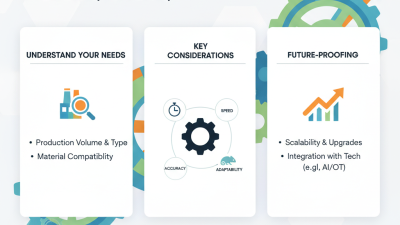
Matching automatic filament equipment to production needs starts with the actual product, not the advertised output. Estimate monthly demand, operating hours, and expected downtime. Then compare that figure with stable production rates, rather than maximum speeds shown in a brochure. A line producing a narrow diameter range may need different controls from one handling frequent material changes. Check whether the extruder, cooling system, haul-off, and winding unit can maintain the required diameter and spool tension together. Small mismatches can create scrap.

Tips: Prepare a sample specification before requesting quotes. Include resin type, target diameter, tolerance, spool size, and planned shift hours. Ask suppliers to explain how they verify diameter control and what routine adjustments operators make. If possible, run your own material during a trial. Watch the line start up, change settings, and wind a full spool. Real production is rarely as tidy as a demonstration.

Also consider operator skills, floor space, power supply, cooling water, and access to replacement parts. Request maintenance intervals and training details in writing. Compare the full setup cost, not just the machine price. One point is easy to overlook: a faster line is not useful if downstream packaging cannot keep pace. Leave room for growth, but avoid paying for capacity your team cannot reliably use. Estimates can be wrong; revisit them after a pilot run.