Leave Your Message
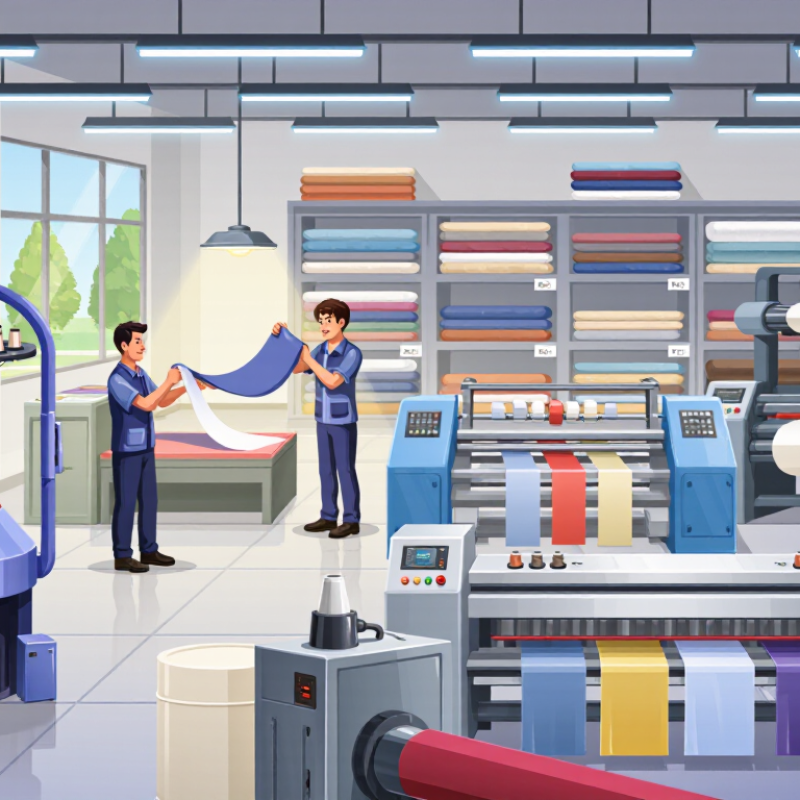
Choosing a Textile Fabric Machine is not a contest for the highest speed or the longest feature list. The right choice depends on the fabric you plan to make, the fibers you will process, and the consistency your customers expect. A lightweight knit and a dense woven fabric place very different demands on machine settings, tension control, and operator skill. One mismatch can show up as uneven edges, visible defects, or wasted rolls.
Textile researcher Dr. Seshadri Ramkumar has emphasized the value of textile innovation and practical industry knowledge. A useful buying principle, expressed here as a paraphrase rather than a verbatim quotation, is: “Match the machine to the material and the intended fabric—not just the advertised output.” That distinction matters. A machine that performs well in a supplier’s demonstration may behave differently with your yarn, room conditions, or production schedule.
Before comparing models, define the fabric specifications, expected daily output, available floor space, and maintenance capacity. Ask suppliers to run a trial using materials close to your actual production inputs. Inspect the sample under good lighting. Check the selvedges, surface consistency, and changeover time. Small details count.
There may be no perfect machine. Your priorities can change as orders and materials change. This guide explains how to compare machine types, essential features, operating costs, and supplier support, so you can make a decision grounded in production needs rather than impressive brochure claims.
How to Choose the Best Textile Fabric Machine?
Start with fabric construction: woven, knitted, and nonwoven materials can require different feeding and processing systems. A machine that handles stable woven cloth may struggle with stretchy jersey. GSM matters too. Lightweight fabric can wrinkle or drift under excessive tension, while heavier material may need stronger drive components. Check the machine’s workable GSM range against your actual samples, not just a supplier’s general description.
Confirm the usable fabric width, including any selvage that must be trimmed. A roll measuring 180 centimeters wide may not provide 180 centimeters of usable material. Bring samples with varied weights and finishes for a trial. Small differences in coating or surface texture can affect feeding. Test them.
Estimate required output from saleable fabric per shift, rather than relying on the machine’s maximum speed. Include setup, roll changes, inspection, and routine stops in the calculation. For example, a line rated for high-speed operation may deliver less when operators frequently switch fabric types. Ask for trial results using your width, GSM, and construction. I would not treat a catalog speed as a promise; real production often exposes weak points that a short demonstration misses. Leave room for demand changes, but avoid paying for capacity your team cannot use.
| Fabric Type and Construction | Typical Fabric Weight (GSM) | Typical Finished Width | Machine Type to Consider | Indicative Production Output | Key Selection Factors |
|---|---|---|---|---|---|
| Single-jersey knitted fabric, such as T-shirt fabric | 100–220 | 60–100 cm tubular, or approximately 120–200 cm open width | Single-jersey circular knitting machine | Approximately 80–250 kg per 24 hours | Match cylinder diameter and gauge to the required fabric width, yarn count, and stitch density. Check whether the machine is configured for the intended yarn and fabric construction. |
| Rib or interlock knitted fabric | 180–350 | 60–150 cm tubular, depending on machine diameter and construction | Double-jersey circular knitting machine | Approximately 100–300 kg per 24 hours | Confirm the required structure, gauge, and needle configuration. Heavier fabrics and finer gauges can reduce output. |
| Warp-knitted fabric, such as lining, mesh, or lightweight apparel fabric | 40–250 | 130–260 cm | Warp knitting machine | Approximately 500–1,800 m per 24 hours | Specify the fabric construction, number of guide bars, yarn type, and finished width. Pattern complexity and machine speed affect production. |
| Woven fabric for apparel or home textiles | 80–350 | 150–360 cm | Rapier loom | Approximately 300–900 m per 24 hours | Consider yarn characteristics, weave pattern, picks per centimetre, required width, and flexibility for changing styles. |
| Light- to medium-weight woven fabric using suitable yarns | 80–250 | 150–360 cm | Air-jet loom | Approximately 600–1,500 m per 24 hours | Check that the yarn and fabric construction are suitable for air-jet insertion. Include compressed-air availability and operating costs in the evaluation. |
| Lightweight woven fabric made from suitable synthetic yarns | 40–180 | 150–360 cm | Water-jet loom | Approximately 800–1,800 m per 24 hours | Best suited to compatible hydrophobic yarns. Assess water quality, water treatment, drainage, and environmental requirements before selection. |
| Planning note: Output figures are indicative ranges, not guaranteed machine ratings. Actual production depends on machine configuration, fabric construction, GSM, width, yarn, operating speed, changeovers, efficiency, and downtime. Confirm capacity using a sample or production trial with the exact target fabric. | |||||