Leave Your Message

How to Choose a Textile Padding Machine in 2026?

Choosing a Padding Machine Textile system in 2026 is not just a matter of comparing prices or production speeds. The right machine must suit your fabric, finishing recipe, line layout, and daily output. A useful question is whether it can deliver even liquor pickup across the full fabric width. Watch the edges. Check the center, too. Uneven padding can lead to visible shade variation, excess chemical use, or repeated rework.

For this guide, textile-finishing specialist Dr. Mira Sen is an illustrative expert, not a real-world source. Her guiding principle is: “Choose the machine that controls your process, not merely the one with the highest rated speed.” Buyers should compare working width, nip pressure control, roller material, bath management, and ease of cleaning. Ask suppliers to demonstrate your actual fabric and recipe, then inspect samples under consistent conditions. A smooth showroom swatch proves little. Real production conditions are less forgiving.

Also consider operator access, maintenance support, spare-part availability, and how quickly settings can be repeated between batches. Request documented performance data and clarify what the warranty covers. A checklist helps, but it cannot predict every production problem. Even experienced teams can overlook a small detail, such as a difficult-to-clean corner near the trough. Treat machine selection as a process decision, and leave room to test your assumptions before committing.
How to Choose a Textile Padding Machine in 2026?

Identify Fabric Types, Chemicals, and Padding Process Requirements

How to Choose a Textile Padding Machine in 2026?

Start with the fabric. A lightweight knit may stretch or distort under pressure, while dense woven material can need stronger, more even liquor penetration. Check the fabric’s width, weight, construction, and sensitivity to heat. Small differences matter. Bring actual production fabric for trials, not just a sample swatch. A narrow swatch may hide edge-to-edge variation.

Next, define the chemical bath. Record its viscosity, solids content, temperature, and any tendency to foam or settle. Confirm that the machine’s trough, rollers, seals, and cleaning routine suit the formulation.

Then match the padding process to the target wet pickup and production speed. Adjustable nip pressure and consistent roller alignment help control how much liquid remains in the fabric. Measure pickup across the width and repeat the test after a run.

Test before committing. This step is easy to rush, and I would not rely on a supplier’s nominal speed alone; actual results depend on fabric tension, bath behavior, and drying conditions. Ask for a trial using your chemistry, then inspect shade or finish uniformity, fabric distortion, and repeatability. One result is not enough.

Compare Padding Machine Designs and Operating Principles

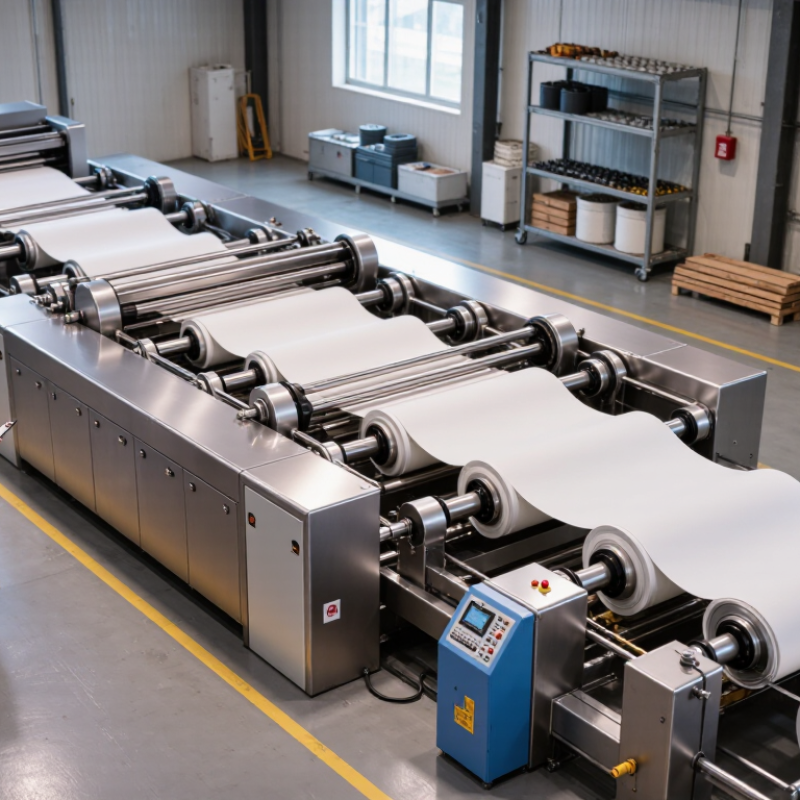
Compare padding-machine designs by how they apply and control liquor. A two-roll padder feeds fabric through a trough, then squeezes it through a nip. Its simplicity suits steady production, but uneven pressure can leave streaks across the width. A vertical arrangement saves floor space; however, threading and cleaning may be less convenient. Multi-roll systems offer more control over fabric tension and pickup, with extra rollers adding maintenance points.

Operating results depend on nip pressure, fabric speed, bath viscosity, and the material itself. Small differences matter. Textile Exchange’s Materials Market Report 2024 estimates that global fiber production reached 124 million tonnes in 2023, with polyester accounting for about 57 percent. This broad mix underlines why a machine should be tested with your actual fabric, not chosen from a brochure alone. A trial should record wet pickup, shade uniformity, edge-to-center variation, and changeover time. The comparison is imperfect: laboratory results may not match a full shift.

Tip: Ask for a trial using your fabric and recipe. Check the first and last rolls, then inspect both edges and the center. Note any foaming or dripping. A setting that looks right on paper may still need adjustment.

Match Machine Capacity and Control Features to Production Goals

Choosing a textile padding machine in 2026 starts with your fabric and daily production target, not the highest capacity on a specification sheet. Estimate meters per shift, working width, fabric weight, and how often styles change. A line rated at 800 meters per hour may be excessive for short batches. Small batches matter. Leave room for seasonal peaks, but avoid capacity that regularly sits idle.

Compare rated speed with usable speed on your own materials. Thick fabric, frequent loading, and careful changeovers can reduce actual output. Check whether operators can adjust line speed, nip pressure, and fabric tension with repeatable settings. Consistent pressure helps control liquor pickup across the width. Recipe storage can also reduce setup time, provided the controls are clear and easy to verify. Not just speed.

Before choosing, run representative fabric through a trial and record throughput, pickup variation, and changeover time. Ask operators to repeat key settings after a stop; that reveals whether controls are practical or merely impressive. Match automation to staff skills and maintenance support. A neat spreadsheet can still mislead. I would treat one successful trial cautiously, since a second fabric type may behave differently. Allow for cleaning and routine checks when estimating daily capacity.

How to Choose a Textile Padding Machine in 2026? - Match Machine Capacity and Control Features to Production Goals
Production Goal Indicative Working Width Indicative Line Speed Example Fabric Throughput Useful Control Features Selection Checks
Laboratory formulation and process trials 300–600 mm About 0.5–10 m/min At 0.5 m width, 5 m/min, and 150 g/m²: about 22.5 kg/h theoretical fabric throughput Adjustable nip pressure, variable speed, repeatable recipe settings, and accessible pressure and speed readouts Confirm the usable width accommodates test samples and that the machine can reproduce the pressure, speed, and liquor conditions intended for production.
Pilot-scale trials and small production batches 600–1,800 mm About 1–20 m/min At 1.2 m width, 10 m/min, and 200 g/m²: about 144 kg/h theoretical fabric throughput Variable-speed drive, controllable nip loading, fabric guiding, and recipe storage where frequent changeovers are expected Check roll alignment, sample-to-production scale-up requirements, and the range and repeatability of nip settings.
Single-shift or flexible production line 1,800–2,400 mm About 5–40 m/min At 1.8 m width, 20 m/min, and 200 g/m²: about 432 kg/h theoretical fabric throughput Closed-loop or clearly monitored nip loading, variable speed, tension control, edge guiding, and stored process recipes Match the working width to the widest fabric, and check that upstream and downstream equipment can support the intended line speed.
High-volume, continuous production 2,400–3,600 mm or sized to the fabric range About 10–60 m/min; confirm against the complete line and process At 2.4 m width, 30 m/min, and 250 g/m²: about 1,080 kg/h theoretical fabric throughput Automated nip-load control, coordinated line-speed control, tension and edge control, fault alarms, and recipe management Assess sustained operating speed, changeover time, maintenance access, roll loading limits, and integration with the full finishing line.
Temperature-sensitive or heated-padding applications Choose to match fabric width and line layout Set according to the fabric, chemistry, and required dwell time Calculate from usable width, actual speed, and fabric mass per area; verify results with production trials Where heating is required: temperature measurement and control, plus nip-load and speed adjustment Confirm whether heated rolls are needed at all; verify temperature uniformity and compatibility with the process recipe.
Planning note: The ranges above are indicative selection benchmarks, not universal machine specifications. The throughput examples are theoretical fabric mass rates, calculated as width (m) × speed (m/min) × fabric mass per area (kg/m²) × 60. They do not include downtime, rejects, moisture pickup, or other process limits. Confirm operating ranges and performance with machine suppliers and fabric trials.

Evaluate Energy Use, Safety, Maintenance, and Automation

How to Choose a Textile Padding Machine in 2026?

A textile padding machine should match your fabric range, daily output, and finishing targets. Do not compare purchase prices alone. Track electricity use during a typical production shift. Ask for energy readings at your working speed, fabric width, and bath temperature. A machine that performs efficiently at low speed may consume more when pushed harder. Check insulation, roller pressure controls, and heat recovery options where relevant. Keep test conditions in writing.

Tips: Run a sample with your own fabric and recipe. Record energy use, fabric moisture, and pickup consistency. Check whether operators can reach routine cleaning points without awkward lifting. Small details matter.

Safety and maintenance affect uptime as much as output. Review guarding, emergency stops, and safe access around heated parts and rollers. Ask how often filters, seals, and rollers need inspection, and whether common wear parts are easy to replace. Automation can help repeat settings and reduce manual adjustments, but it is not automatically better. If recipes or operator training are not ready, extra controls may create confusion. Request a practical demonstration, then see whether your team can change a setting, clear a fault, and resume production confidently. I would leave some evaluation time for that; a polished showroom run can hide ordinary setup frustrations.

Assess Total Cost, Supplier Support, and 2026 Compliance Needs

A low purchase price can hide costs that appear after installation. Compare total cost over the machine’s expected working life, not just the quote. Include delivery, commissioning, operator training, utilities, routine maintenance, spare parts, and planned downtime. Ask for estimated energy use at your intended speed and fabric width. Then check whether the estimate reflects your actual production conditions. Small details matter.

Supplier support affects those costs. Confirm response times, technician availability, and access to replacement parts before placing an order. Ask directly. Request a sample maintenance schedule and clarify which repairs your team can handle. A written service scope is useful, though it may not predict every delay. Keep some budget for unexpected wear; even careful estimates miss things.

For 2026, verify requirements for the country and site where the machine will operate. Check applicable machine guarding, electrical safety, noise, energy, and process-chemical documentation needs. These can differ by market and installation. Ask the supplier for current technical files, risk information, and conformity documents relevant to your application, then have a qualified local professional review them. Do not assume a document covers every configuration. Compare the machine’s controls and safety features with your facility’s procedures before finalizing the purchase.

How to Choose a Textile Padding Machine in 2026

Compare total cost, supplier support, and compliance readiness—not just the purchase price.

Illustrative 5-year electricity cost

Calculated from rated power × 2,000 operating hours per year × $0.12/kWh × 5 years. The 10, 15, and 20 kW ratings and electricity tariff are example inputs, not market averages; replace them with supplier specifications and your local tariff. Include installation, maintenance, spare parts, downtime, and operator training in your total-cost comparison. For EU purchases, Regulation (EU) 2023/1230 applies from 20 January 2027, so confirm the machine’s documentation and the supplier’s transition-readiness for your intended delivery and use.