How to Choose a Textile Recycling Machine for Your Business?
Choosing a Textile Recycling Machine is a practical decision, not a purchasing race. The right equipment must match your fiber waste, production volume, floor space, and business goals. Cotton cutting scraps behave differently from polyester blends, denim, or post-consumer garments. That difference matters.
Fashion Revolution co-founder Orsola de Castro has said, “The most sustainable garment is the one that already exists.” Her statement highlights an important point: recycling equipment should preserve material value whenever possible. A machine that produces clean, reusable fiber may support better outcomes than one focused only on speed. However, no machine solves every problem. Some systems create excessive dust. Others struggle with zippers, seams, moisture, or mixed fibers.
Look closely at the complete process. Check opening capacity, shredding intensity, fiber length, dust-control design, energy use, maintenance access, and operator safety features. Ask suppliers for test results using your actual waste. Do not rely on polished samples alone. A small trial with 100 kilograms of fabric can reveal feeding problems, tangled fibers, and unexpected downtime.
Budget matters. So does consistency. A cheap machine may become expensive when blades wear quickly or spare parts arrive slowly. Request installation support, training, warranty terms, and local technical service. Visit an operating facility if possible. Listen to the operators. They notice details brochures often miss.
Your first choice may still be imperfect. That is normal. Review the fiber output, noise, dust, labor needs, and repair records after testing. Then choose the Textile Recycling Machine that fits your real workflow, not an imagined one.
Define Your Textile Recycling Goals and Material Types
Before choosing a textile recycling machine, define what success means for your business.
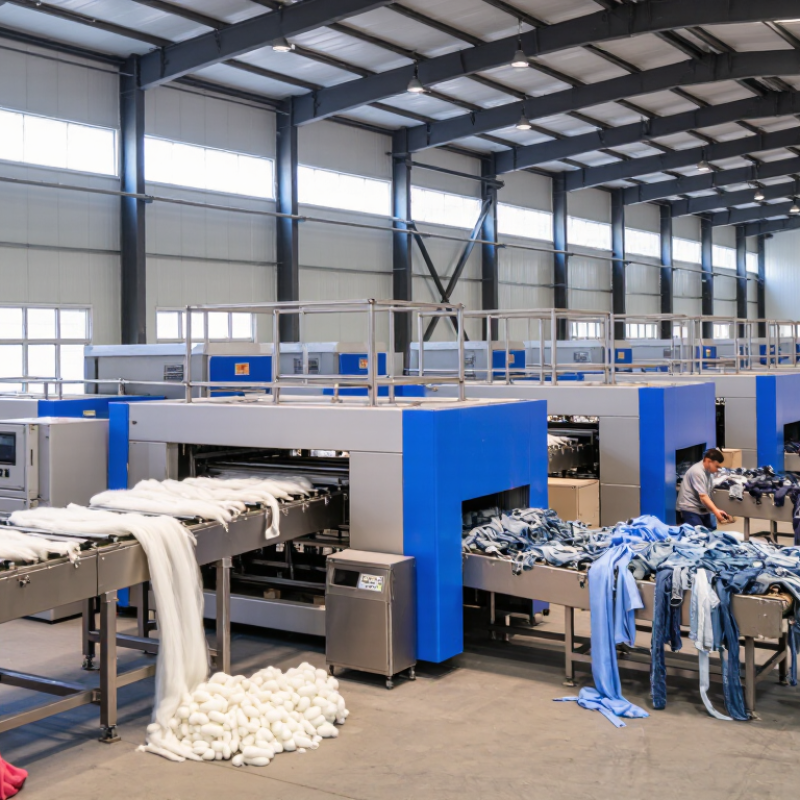
Your goal may be fiber recovery, fabric shredding, material separation, or waste reduction. These goals require different machine features and processing stages. A factory handling clean cutting scraps has different needs from a facility receiving used clothing. Measure your weekly waste volume, storage space, labor capacity, and desired output quality. Small details matter.
Identify the materials carefully. Cotton, wool, polyester, nylon, and blended fabrics behave differently during recycling. Cotton may require opening and fiberizing equipment, while polyester often needs controlled cutting and separation. Blended textiles can be more difficult to process and may produce lower-value fibers. Record fabric composition, color, moisture, and contamination levels. Zippers, buttons, labels, and elastic parts can damage equipment or reduce product quality.
Request representative samples before making a purchase.
Run denim scraps, lightweight shirts, and mixed-color materials through testing equipment. Observe fiber length, dust generation, throughput, and noise. Ask whether operators can clean and adjust the machine without excessive downtime. A practical mistake is planning around the best material sample only. Real waste is inconsistent. Your machine should handle ordinary loads, not just ideal ones. Goals may also change as your suppliers, waste streams, or customers change. Leave room for adjustment, even if that increases the initial cost.
Compare Machine Technologies for Different Textile Waste Streams
How to Choose a Textile Recycling Machine for Your Business?
Compare Machine Technologies for Different Textile Waste Streams
The right machine depends on the waste, not only the desired output. Clean cotton cutting scraps usually need a tearing and opening line. It separates fibers while preserving useful length. For mixed post-consumer garments, shredders handle seams, buttons, and dense fabric more effectively. However, aggressive shredding can shorten fibers and reduce yarn quality. Start with a measured waste sample. Do not trust a brochure alone.
Wet textiles require special attention. Moisture can clog feeding systems and encourage odor. Keep it dry. For wool, delicate opening equipment helps reduce fiber damage. Blended fabrics are harder to process because cotton, polyester, and elastane respond differently. Mechanical separation may produce a lower-grade material. Advanced sorting systems can identify color and fiber differences, but they need consistent feeding and regular calibration. Small variations matter.
For clean, single-fiber waste, a garnetting machine may offer practical results at moderate throughput. For heavily contaminated material, pre-sorting and metal detection should come first. Dust control, noise levels, blade access, and operator safety also affect real production costs. A machine that runs quickly may still perform poorly with uneven feedstock. That mistake is common. Request a trial using your actual waste, then check fiber length, contamination, energy use, and maintenance time. The first test may expose problems you did not expect.
How to Choose a Textile Recycling Machine for Your Business?
Technology suitability varies by fiber composition, contamination level, and whether the waste is available as a consistent stream. The chart compares typical suitability on a 1–5 scale, where 5 indicates strong technical compatibility.
Interpretation: Mechanical opening is generally effective for clean, mono-material cotton and polyester waste. Solvent-based dissolution can separate or purify selected fiber polymers but requires more complex chemical handling. Melt processing is best suited to thermoplastic fibers such as polyester, while blended and elastane-containing textiles usually require sorting or a specialized separation process before recycling.
Evaluate Processing Capacity, Output Quality, and Energy Use
Choosing a textile recycling machine starts with your actual material flow, not its maximum brochure capacity. Measure daily input by fabric type, moisture level, and contamination. A machine rated for 1,000 kilograms per hour may process less when handling dense denim or mixed fibers. Ask for a trial using your own textile bales. That test often reveals feeding problems, dust buildup, and unexpected downtime.
Output quality should match your next production step. Inspect fiber length, color separation, and visible impurities after processing. For spinning applications, uneven fiber length can reduce yarn consistency. For insulation or filling, appearance may matter less than clean, stable volume. Keep sample records from several production runs. One attractive sample proves very little. I once underestimated how quickly dull blades changed the output, so maintenance access now matters as much as cutting performance.
Energy use needs a practical calculation. Compare kilowatt-hours per processed kilogram, not only motor power. Check whether the machine needs separate dust extraction, compressed air, or heating equipment. These supporting systems can quietly increase operating costs. Request energy data under working conditions, including startup and idle periods. A smaller machine may consume less electricity but require longer shifts. That trade-off deserves careful review. Track power readings during a week-long pilot, because laboratory figures can feel optimistic. Safety controls, operator training, and spare-part availability also affect reliable production, even when they are missing from the first quotation.
Check Safety Features, Maintenance Needs, and Operating Costs
Choosing a textile recycling machine starts with safety, not advertised throughput. Textile Exchange’s Materials Market Report 2024 estimates global fibre production reached 124 million tonnes in 2023. More processing also means more exposure to dust, noise, moving blades, and heat. Check fixed guards, interlocked access doors, emergency stops, and automatic shutdown sensors. Dust extraction should match the machine’s output. Ask for measured noise levels, not vague claims. A safer machine protects operators and reduces avoidable stoppages.
Maintenance needs can decide whether a machine remains profitable. Inspect the cutting chamber, filters, belts, bearings, and sensor locations before purchase. Can one technician reach them without removing half the machine? Request maintenance intervals, spare-parts prices, and documented response times. The European Environment Agency reports that Europeans consumed about 15 kilograms of textile products per person in 2020. That volume creates continuous wear. Small failures become expensive quickly. I would not trust a system that hides its cleaning time.
Operating cost requires more than the purchase invoice. Record electricity use in kilowatt-hours per tonne, labour hours, filter replacement, water consumption, and rejected material. Compare these figures at your expected feed rate, not the supplier’s best demonstration. A machine processing mixed textiles may deliver less usable fibre than its brochure suggests. That gap matters. Test real samples, including seams, damp fabric, and contaminated loads. The result may look less impressive, but it is more reliable. Calibration and preventive maintenance also deserve a line in the budget. Many buyers underestimate them.
Assess Supplier Support, Facility Requirements, and Future Scalability
Choosing a textile recycling machine requires more than comparing hourly capacity.
Textile Exchange’s 2024 Materials Market Report estimates global fiber production reached
124 million tonnes in 2023.
It may reach
160 million tonnes by 2030.
That growth makes supplier support a long-term operating issue.
Ask how quickly technicians respond, not only how fast the machine runs.
Request spare-parts lead times, remote diagnostics, operator training, and maintenance records from comparable installations.
A useful test is a sample run using your own mixed textiles. Measure fiber length, dust levels, moisture, and rejected material.
Marketing figures can look impressive. Your feedstock may behave differently.
Facility requirements also deserve a physical checklist.
Confirm floor loading, ceiling height, electrical demand, ventilation, dust extraction, noise control, and fire-protection arrangements with qualified engineers.
The European Environment Agency reported that Europeans generated about
6.95 kilograms of textile waste per person in 2020.
Collection volumes may rise as separate collection expands. Leave space for extra sorting, storage, and baling equipment.
I once underestimated storage needs. That mistake was expensive.
For future scalability, choose modular equipment with adjustable opening intensity and replaceable wear parts.
Ask whether the control system can record throughput, downtime, energy use, and quality data.
A supplier should explain upgrade paths without forcing a complete line replacement.
“Scalable” is often vague.
Put capacity ranges, service levels, training hours, and acceptance tests into the contract.
Recheck every assumption.