Leave Your Message
Choosing the world’s top Textile Dryer Machine manufacturers requires more than comparing catalogue prices. Drying affects fabric moisture, dimensional stability, color fastness, energy use, and production speed. A poorly matched machine can leave cotton jersey damp at the edges, or over-dry synthetic fabric near the tenter frame.
Industry data supports this concern. The International Textile Machinery Federation’s 2024 International Textile Machinery Shipment Statistics shows continuing investment in textile finishing equipment, despite weaker global machinery demand. The International Energy Agency also identifies industrial heat as a major energy challenge, making thermal efficiency increasingly important. These reports do not rank dryer manufacturers directly. However, they explain why heat recovery, airflow control, insulation, and automation now influence purchasing decisions.
As textile materials expert Dr. Seshadri Ramkumar has stated, “Sustainability is no longer an option; it is a necessity.” That principle applies directly to textile drying. Leading suppliers should demonstrate measurable energy savings, stable outlet moisture, accessible maintenance points, and credible after-sales support. Their equipment should perform under real factory conditions, not only inside a showroom.
The ranking remains imperfect. Different mills need different answers. A high-speed stenter may suit technical fabrics, while a compact drum dryer may better serve smaller knitwear lines. Therefore, this guide evaluates manufacturers through engineering capability, operating experience, verified performance, safety design, and global service coverage. Readers should still request production trials, energy figures, reference sites, and lifecycle costs before selecting a supplier. Reliable evidence matters more than impressive brochures.

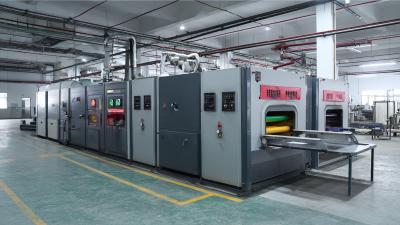
A textile dryer machine removes water from fabric after washing, dyeing, printing, or coating. It usually uses heated air, controlled airflow, and conveyor or roller movement. Common designs include tumble dryers, stenter dryers, relax dryers, and vacuum systems. The machine must balance temperature, speed, fabric tension, and exhaust humidity. Excessive heat can weaken fibers, distort width, or create shade differences.
Energy matters greatly. The International Energy Agency’s Energy Efficiency 2023 report states that industry consumes nearly 40% of global final energy. The European Commission’s textile industry BAT reference document also identifies drying and finishing as important energy-consuming stages. In practice, operators should measure fabric moisture before and after drying. A stable outlet moisture level is more useful than simply choosing the highest temperature. A dryer may appear efficient on paper, yet uneven airflow can leave damp edges and force reprocessing. That is an expensive weakness.
Tips: Check moisture sensors every shift. Clean lint from filters and ducts. Compare gas or electricity use per kilogram of dried fabric. Keep a small test roll before full production. I would not trust one efficiency figure alone; fabric type, loading, ambient humidity, and maintenance change the result. Even a well-designed machine can perform poorly when airflow is restricted or the line moves too quickly.
A textile dryer machine removes moisture from fibers, yarns, knitted fabrics, woven fabrics, garments, or technical textiles after washing, dyeing, printing, coating, or finishing. The most suitable equipment depends on fabric construction, required residual moisture, production width, heat source, energy efficiency, and process control requirements.
| Machine Type | Primary Drying Principle | Typical Textile Applications | Typical Working Width | Typical Operating Temperature | Typical Throughput Range | Common Heat Sources | Main Advantages | Key Selection Considerations |
|---|---|---|---|---|---|---|---|---|
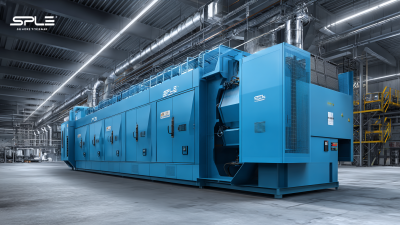
| Stenter Dryer | Hot air circulates through the fabric while selvage clips or pins control width and dimensional stability. | Woven and knitted fabrics; heat setting, drying, finishing, coating, and width control. | 1.8–3.6 m | 100–220 °C, depending on fiber and process | 10–80 m/min, depending on fabric weight and moisture load | Natural gas, thermal oil, steam, electric heating, or heat recovery systems | Precise width control, even drying, and integration with finishing processes. | Energy consumption, exhaust-air management, clip or pin maintenance, and fabric overfeed control. |
| Relaxation Dryer | Fabric is transported in a low-tension or tensionless condition through heated air chambers. | Knitted fabrics, elastane blends, tubular fabrics, and materials requiring shrinkage relaxation. | 1.2–3.4 m | 80–180 °C | 8–50 m/min | Gas, steam, thermal oil, or electric heating | Reduces fabric tension and supports controlled shrinkage and softer hand feel. | Overfeed accuracy, fabric residence time, airflow uniformity, and chamber design. |
| Drum Dryer | Textiles tumble or contact a perforated heated drum while hot air removes evaporated moisture. | Garments, towels, terry fabrics, household textiles, and loose textile articles. | Batch or continuous; drum diameters commonly range from 0.8–2.5 m | 60–160 °C | 20–300 kg per batch, or approximately 100–600 kg/h in continuous systems | Gas, steam, thermal oil, or electric heating | Suitable for bulky goods and batch processing; relatively simple operation. | Mechanical abrasion, tangling, loading capacity, lint removal, and drying uniformity. |
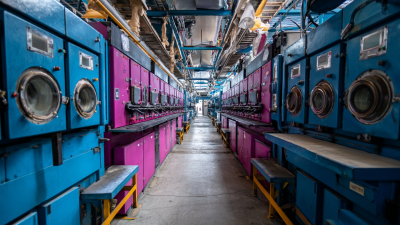
| Tumble Dryer | Garments or textile articles tumble in a rotating drum while heated air passes through the load. | Finished garments, workwear, denim, towels, hospital textiles, and laundry operations. | Usually 10–150 kg per batch | 40–120 °C | 5–60 kg per cycle, depending on machine size and fabric type | Gas, steam, heat pump, or electric heating | Flexible batch drying, short cycle times, and suitability for finished garments. | Fabric shrinkage, colorfastness, drum loading ratio, airflow, and residual-moisture control. |
| Loop Dryer | Open-width fabric travels through multiple hot-air chambers in suspended loops with minimal surface contact. | Knitted fabrics, delicate fabrics, printed textiles, and fabrics sensitive to creasing or contact marks. | 1.8–3.6 m | 90–200 °C | 10–70 m/min | Gas, steam, thermal oil, or electric heating | Low contact pressure, reduced creasing, and good fabric separation during drying. | Loop length, airflow balance, fabric tracking, lint control, and floor-space requirements. |
| Hot-Flue Dryer | Fabric passes through heated flues where hot air is directed across or through the textile surface. | Printed fabrics, coated textiles, synthetic fabrics, and continuous finishing lines. | 1.6–3.4 m | 80–200 °C | 15–100 m/min | Gas, steam, thermal oil, or electric heating | High production speed and effective integration with printing or coating equipment. | Air velocity, solvent or moisture exhaust, thermal uniformity, and fabric dwell time. |
| Radio-Frequency Dryer | Radio-frequency electromagnetic energy heats water molecules volumetrically inside the textile. | Yarn packages, carpets, nonwovens, technical textiles, and products with uneven moisture distribution. | Equipment-specific; commonly used for rolls, packages, or continuous webs | Product temperature is commonly controlled around 40–120 °C | Approximately 50–500 kg/h, depending on moisture load and system configuration | Radio-frequency electrical power, usually combined with warm air | Rapid internal heating, improved moisture equalization, and potentially shorter drying times. | RF safety compliance, dielectric properties, moisture uniformity, shielding, and capital cost. |
| Microwave-Assisted Dryer | Microwave energy generates volumetric heating within water-containing textile materials, often assisted by hot air. | Technical textiles, nonwovens, specialty coatings, and selected laboratory or industrial processes. | Application-specific; commonly configured for rolls, sheets, or batch loads | Product temperature is commonly controlled around 40–120 °C | Application-specific; commonly 20–300 kg/h | Microwave electrical power with hot-air assistance | Fast response and effective heating of materials with internal moisture. | Microwave shielding, material compatibility, hot-spot prevention, and electrical operating cost. |
| Vacuum Dryer | Reduced pressure lowers the boiling point of water, allowing moisture removal at relatively low product temperatures. | Heat-sensitive fibers, specialty textiles, coated materials, and laboratory or batch production. | Batch chambers commonly 1–20 m³ | 30–90 °C product temperature, depending on vacuum level | Approximately 10–500 kg per batch | Steam, hot water, thermal oil, or electric heating | Low-temperature drying and reduced oxidation or thermal damage. | Vacuum pump capacity, sealing, batch time, chamber loading, and maintenance requirements. |
| Heat-Pump Dryer | A closed-loop refrigeration system recovers and reuses heat while dehumidifying circulating air. | Garments, towels, delicate fabrics, recycled fibers, and operations focused on energy reduction. | Usually batch-based; 10–300 kg per batch | 40–80 °C | 5–60 kg per cycle | Electric heat-pump system | Lower exhaust heat loss, reduced operating temperature, and strong energy-saving potential. | Longer cycle times, ambient conditions, refrigerant maintenance, and initial investment. |
Technical note: Temperature, width, throughput, and energy performance are typical industry ranges rather than fixed specifications. Actual results vary according to fiber composition, fabric weight, inlet moisture, target residual moisture, machine configuration, ambient conditions, and process speed.