Leave Your Message

What Is a Professional Crimping Machine?

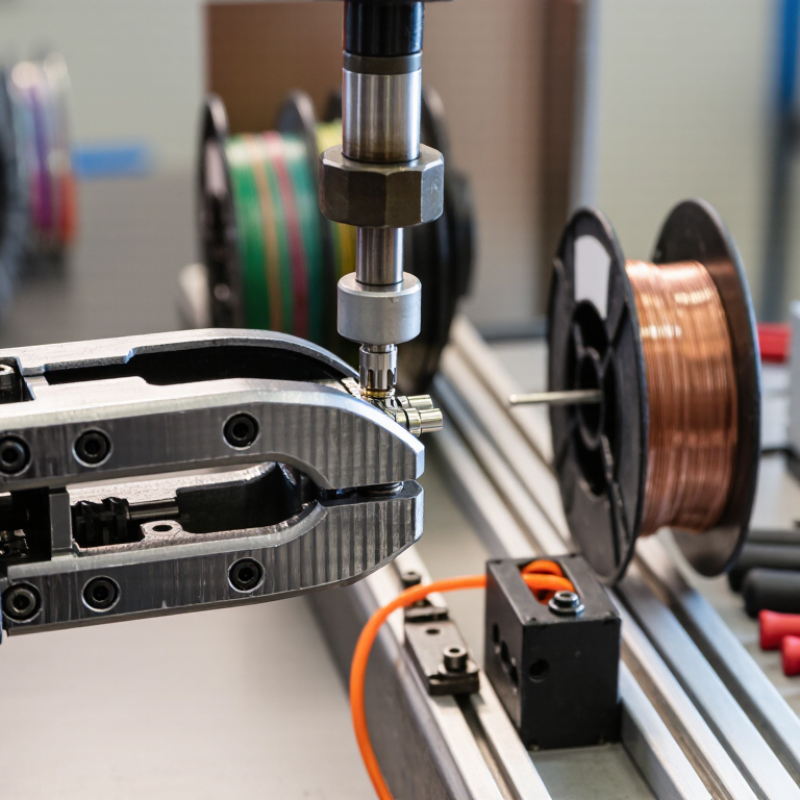
A Professional Crimping Machine joins a wire and terminal through controlled pressure. The result should be mechanically secure and electrically consistent. These machines serve automotive, appliance, industrial, and electrical-equipment production. Some use hand-fed tooling; others automate feeding, cutting, stripping, and crimping. The right choice depends on terminal design, wire range, production volume, and required process control. Small setup details matter. A slightly misaligned terminal can create a weak connection, even when the machine appears to run normally.

A real expert quotation needs a verifiable source, so this draft does not invent one. Instead, fictional industry specialist Alex Morgan offers an illustrative line: “A reliable crimp starts with the right terminal, wire, and tooling.” The idea is practical, but incomplete. Operators must also check settings, inspect samples, and monitor wear. A crimp-height measurement can reveal variation before it affects a larger batch. Still, measurement alone cannot explain every defect. This guide introduces how a Professional Crimping Machine works, which machine types are available, and what buyers should assess before selection. It also considers setup, quality checks, maintenance, and common process limitations. One point deserves reflection: automation can improve repeatability, but it does not replace sound application knowledge. That distinction is easy to overlook.
What Is a Professional Crimping Machine?

What Defines a Professional Crimping Machine and Its Core Function

What Is a Professional Crimping Machine?

A professional crimping machine makes a controlled mechanical and electrical connection between a wire and a terminal. Its core function is to compress the terminal around the conductor with repeatable force and geometry. A good crimp is not simply tight: it must hold securely, conduct reliably, and avoid cutting or deforming wire strands. Machines may be manual, pneumatic, or automated, but each should match the terminal, wire size, and production rate.

Professional quality depends on measurable setup and verification. IEC 60352-2:2020 describes qualification and testing for solderless crimped connections, including tensile testing. IPC/WHMA-A-620F provides workmanship acceptance criteria for cable and wire-harness assemblies. Neither supports one universal pull-force value for every connection; requirements depend on the wire and terminal combination. Operators should check tooling condition, crimp height where specified, and sample connections at defined intervals. Small setup errors matter. A worn die can leave a loose barrel or flattened strands, even when the machine cycle sounds normal.

Tip: Confirm the terminal-and-wire pairing before production. Keep a sample from each setup, record inspection results, and stop if the crimp changes shape. One overlooked detail: the correct machine cannot compensate for mismatched materials.
What Is a Professional Crimping Machine?

Its core function is to apply controlled compression, joining a conductor to a terminal through a correctly formed crimp.

The bars show sequence order, not measured force, speed, or machine performance. Exact operation depends on the machine and terminal; the finished crimp should be checked against the applicable specification.

Which Machine Types Serve Wire Harness and Cable Assembly Production

What Is a Professional Crimping Machine?
Which Machine Types Serve Wire Harness and Cable Assembly Production

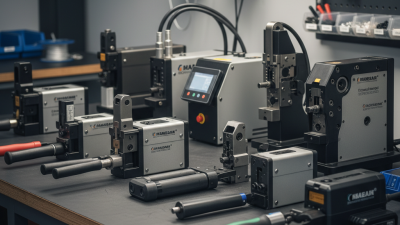
A professional crimping machine joins a terminal to a wire by compressing metal around the conductor. In production, the right machine depends on wire size, terminal design, and daily volume. A bench press with interchangeable applicators suits repeat jobs and controlled workstations. Operators feed wires by hand, while the press delivers consistent strokes. It is a practical middle ground. Setup still takes care.

For prototypes and short runs, calibrated hand tools or compact bench machines can handle varied terminals without a large automated line. Higher-volume harness production often uses automatic cut, strip, and crimp machines. These feed wire, remove insulation, and attach terminals in sequence. Some systems also add seals or process both wire ends. A clear view of the wire end and a stable feed path matter; a bent strand can spoil a good-looking crimp.

Cable assembly may call for heavier presses or dedicated coaxial cable equipment, depending on conductor size and terminal geometry. Match the machine’s force range and tooling to the terminal specification, then verify results with visual checks and periodic pull testing. Force monitoring can flag process changes, but it does not replace inspection. There is no perfect setup for every shop. A fast line can still create waste when changeovers are frequent, and that tradeoff deserves an honest review.

What Is a Professional Crimping Machine? - Which Machine Types Serve Wire Harness and Cable Assembly Production

A professional crimping machine applies controlled force to join a terminal or connector to a conductor. The figures below are indicative ranges, not guaranteed specifications; output and capability depend on the terminal, wire, tooling, setup, and inspection requirements.

Machine Type How It Works Typical Production Rate Common Applications Setup and Changeover Best Fit Key Consideration
Manual bench crimping press A hand lever or toggle mechanism drives a matched crimping die onto a terminal and conductor. Operator-dependent; commonly suited to prototypes and small batches rather than continuous high-volume output. Repair work, samples, low-volume harnesses, and terminals that require a dedicated applicator or die. Relatively simple; the operator loads the wire and terminal for each crimp. Low-volume production, development, and occasional crimping tasks. Production consistency depends on correct tooling, operator technique, and regular crimp inspection.
Pneumatic crimping press Compressed air powers the press stroke; the operator typically positions each wire and terminal. Often specified by press strokes per minute; practical output depends on manual part handling and the operation. Small-to-medium batches, repetitive terminal crimping, and work requiring more consistent actuation than a hand press. Moderate; requires a suitable air supply and the correct applicator or tooling. Production cells with recurring jobs and moderate volumes. Air pressure, guarding, tooling setup, and maintenance affect repeatability and safe operation.
Electromechanical or servo crimp press An electric motor or servo system controls the ram motion and can support programmable process settings. Varies by press, applicator, and handling method; cycle-based output is typical for operator-fed work. Repeat production, process-sensitive crimps, and applications where stroke control or monitoring is useful. Program settings may be stored, but tooling and terminal-specific setup are still required. Manufacturers seeking repeatable settings and process data for production control. Monitoring features can help identify process variation, but do not replace correct tooling or verification.
Automatic cut-strip-crimp machine Feeds wire, cuts it to length, strips insulation, and crimps one or both ends in an integrated sequence. Output is commonly measured in finished wire leads per hour and varies substantially with wire length, end processing, and changeovers. High-volume wire leads and harness components with repeatable lengths and terminal combinations. Higher initial setup effort; programs, feed settings, blades, and applicators must match the job. Recurring production runs with stable product specifications. Wire handling, insulation type, cut length, strip quality, and terminal presentation all influence throughput.
Automatic dual-end processing machine Processes both ends of a wire in one programmed cycle, often combining cutting, stripping, and terminal crimping. Depends on wire length, terminal type, end-to-end sequence, and whether both ends are processed simultaneously or in stages. Harness leads requiring terminals or other prepared ends at both ends of the wire. Requires accurate program setup for wire length, strip lengths, end orientation, and terminal tooling. Repeat production of defined two-ended wire assemblies. Complex jobs and frequent product changes can reduce the advantage of automation.
Crimp applicator on a compatible press A terminal-specific applicator feeds and forms terminals while a separate press supplies the crimping stroke. Press-cycle capability depends on the host machine, applicator, terminal feed, and operator or automation setup. Reel-fed open-barrel terminals and other terminals designed for a matching applicator. Applicators are changed and adjusted for the terminal; setup should follow the tooling instructions. Shops producing multiple terminal types on a shared press platform. Applicators are not universally interchangeable; verify compatibility with the press and terminal specification.

How Dies, Applicators, and Force Settings Produce Repeatable Crimps

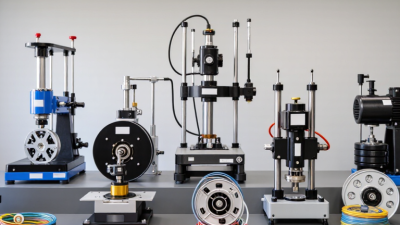
A professional crimping machine makes repeatability a process, not a matter of operator feel. The die shapes the barrel around the conductor; the applicator aligns the terminal and feeds it into the press. Even a small misalignment can leave strands outside the barrel or create uneven compression. Small differences matter. Set crimp height and force to the terminal and wire specifications, then verify samples with a calibrated gauge and pull tester. More force is not automatically better.

USCAR-21 Rev. 4, an automotive industry crimp-performance specification, sets tensile-test requirements according to wire and terminal characteristics. Its approach highlights why one force setting cannot suit every combination. Track crimp height, pull-test results, and press force over production runs. A stable force trace can flag a jam or tool wear, but it does not replace physical inspection. A worn die can look fine at a glance. IPC/WHMA-A-620 also provides workmanship criteria for crimped connections, including visible defects that measurements may miss. Keep the die clean, check applicator alignment, and record settings after tool changes. That routine may feel repetitive; skipping it is where uncertainty creeps in.

How IPC/WHMA-A-620’s 3 Product Classes Guide Crimp Acceptance

A professional crimping machine applies controlled force to join a terminal and wire, but machine quality alone does not determine whether a crimp is acceptable. IPC/WHMA-A-620 provides workmanship criteria for cable and wire-harness assemblies. Its three product classes help teams judge acceptance according to the product’s intended use and documented requirements.

Class 1 covers general electronic products, where the finished assembly must function as intended.

Class 2 applies to dedicated-service products, where longer life and dependable performance matter.

Class 3 covers high-performance products that may operate in demanding conditions and require tighter acceptance expectations.

These are not simply labels for “good, better, best.” The customer or contract should specify the applicable class, and the relevant criteria depend on the connection and assembly.

Small details matter.

An inspector may examine conductor strands, insulation support, terminal deformation, and other features against applicable requirements. A machine can repeat the same stroke all day, yet a misplaced wire or worn applicator can still produce a questionable result.

In practice, this is where teams can become too confident. A crimp that looks neat under shop lighting is not automatically acceptable. Pair the correct class with the required inspection method, component specifications, and process checks; document borderline findings rather than relying on appearance alone.

Which Checks Verify Crimp Quality: Height, Pull Force, and Traceability

What Is a Professional Crimping Machine?

Which Checks Verify Crimp Quality: Height, Pull Force, and Traceability

A professional crimping machine should produce repeatable joints, not just tidy-looking ones. Measure crimp height with a calibrated micrometer at the specified location. Record the terminal and wire combination, since acceptable dimensions vary by design. Small changes matter. A few hundredths of a millimeter can signal worn tooling, incorrect wire positioning, or an unstable setup. Visual inspection helps, but it cannot replace measurement.

Pull-force tests check whether the connection withstands mechanical stress. Use the minimum value specified for the terminal and wire size; standards such as UL 486A-486B set requirements by conductor range. Test samples at setup and after tooling changes, then compare results over time. A single strong sample is not proof of a stable process. It is tempting to trust the average, but low individual readings deserve attention.

Traceability links each result to the machine, tool, material lot, operator, and test time. Keep crimp-height readings and pull-force results together, including failures and adjustments. AIAG’s Measurement Systems Analysis reference treats measurement-system variation below 10% of study variation as generally acceptable; 10–30% may require context, while above 30% is generally unsuitable. That threshold concerns measurement reliability, not crimp acceptance. A neat record can still miss a bad setup. Check that the gauge itself is trustworthy.